AA Raiba has had a career that spans six decades. His works form part of prominent collections in India and abroad. Most of his life was spent in a single-room tenement on Temkar street, a locality of Konkani Muslims in central Bombay. In this room that housed him, his wife and his three children, the canvases on exhibit were made from jute mixtures, and painted. Flat figures are bordered by thick black lines initially drawn in charcoal, in a kind of cloisonnism. Having been trained in the revivalist Bombay School that often referenced visual vocabulary from Indian miniature traditions and influenced by the modernisms exposed to him by Charles Gerard, Raiba charted a path that was independent from the Bombay School and the Progressive Artists Group. His early miniatures were published by the Illustrated Weekly of India for their covers. Encouraged by exiled artist and art critic Walter Langhammer, he spent three years in Kashmir. He documented the folk motifs seen in the temples of Jammu and the Pahari kingdoms of Himachal Pradesh. Kashmir gave him an excellent understanding of perspective while executing landscapes. Documenting renditions of humans and animals within the Pahari miniature paintings provided him with a visual cache that would often reappear in his works. Soon after returning to Bombay, Raiba abandoned the use of watercolour, and began working with oil on a prepared canvas made of jute. Here he began placing these folk motifs derived from Pahari miniatures into cubist perspectives narrating erotic tales of love. A King with a three point crown with his consort was placed beside nudes influenced by the European modernist movement. The straight lines that made the verandas appear cubist came from his travels sketching villas and churches in Goa and the Malabar coast. Another work hints at the use of surrealistic scale, where a still life with a bouquet of cubist roses dwarfs a camel and an elephant.
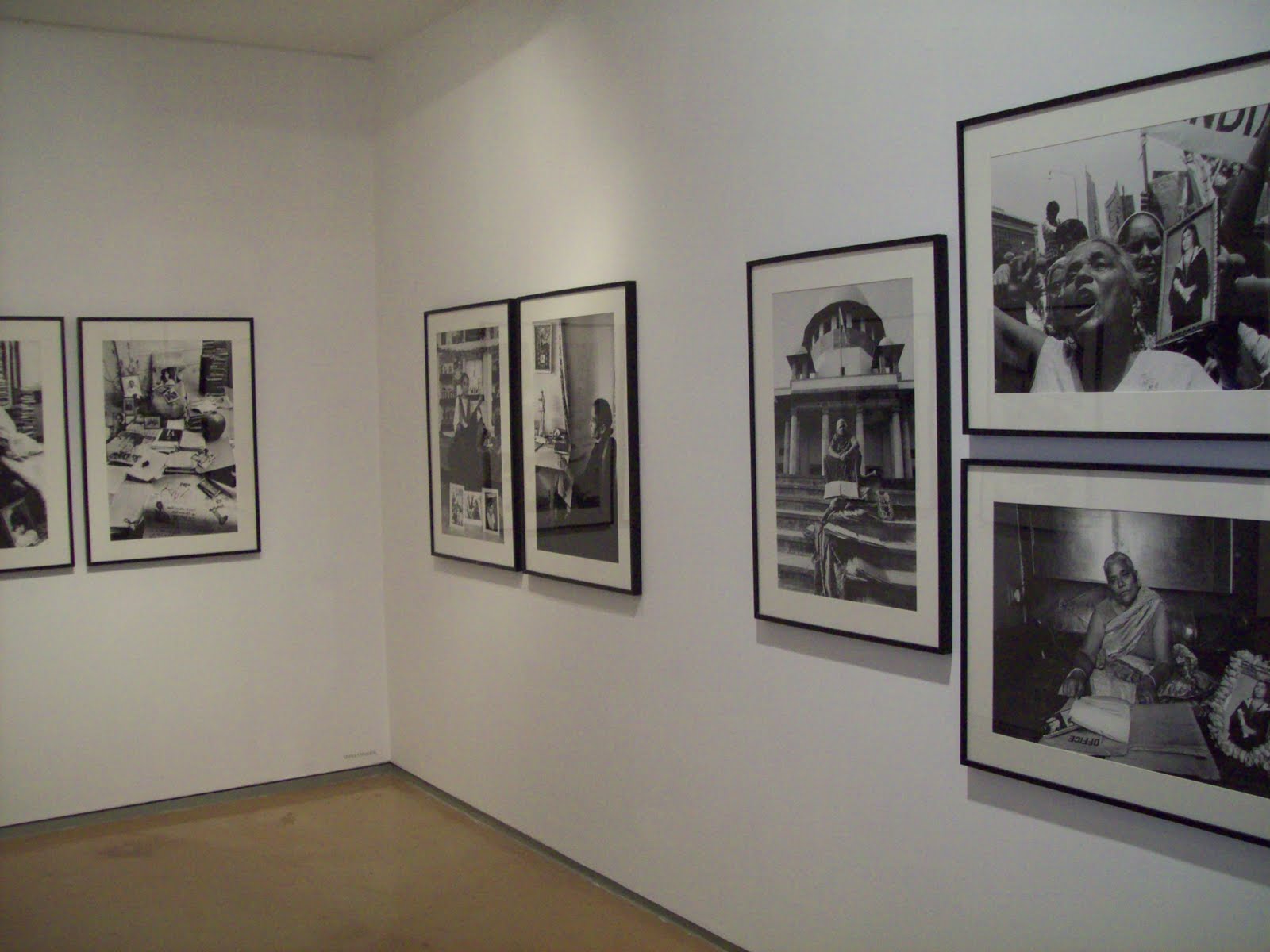
Droit de Suite or the 'art proceeds right' is the right of artists to receive royalty on subsequent sales of their works if it exceeds a certain amount. Droit de Suite is the conceptual framework of this exhibition of works from a private collection to be placed on sale, where 20% of the sales price will be received by the artist AA Raiba. In India no legislation stipulates this right and therefore many subsequent sales after the first sale, especially in auctions, do not reserve a percentage of the proceeds for the artist. The Indian art had its nascency in the decade that followed economic liberlisation in the early 90s. India's early modernists, through their careers, grappled with a disorganized market, often selling for prices that offered meagre subsistence, rather than wealth and savings. Raiba continues to live in a one-room flat in Nala Sopara, the ancient port, and a distant suburb of Bombay. Like many of his contemporaries he does not receive any royalty on any subsequent sales of his work in the secondary market. No legislation in India stipulates that auction houses, galleries, collectors and dealers need to pay a small percentage (5%) of the sales proceeds in secondary sales to the artist. In the European Union, the United Kingdom, and Australia, percentages to be paid to an artist vary, forming an inverse relationship to the sales price. This exhibition proposes that a percentage of the sales proceeds be always paid to the artist by the seller in future, as an ethical and moral obligation, rather than a legal stipulation, with the hope that enough awareness is drawn to organise artists to lobby for a legislation in India on the lines of those that are present in the European Union, the UK, Australia, and the USA. The exhibition includes documents, laws and agreements that insure the residual right of an artist in every subsequent resale or rental of their work, as found in other parts of the world, and importantly, the curator Seth Siegelaub's The Artist's Reserved Rights Transfer and Sale Agreement 1971.
AA Raiba: Droit de Suite | Artist's Resale Rights
5-22 July, 11am to 7pm everyday including holidays and Sundays.
Works available on private view on the 4th of July from the 6pm to 9pm and by prior appointment.
Acknowledgements: Sir JJ School of Art, Professor Kashinath Salve, Professor Dr. Manisha Patil, Proffessor Anand Nikam, Susan Hapgood, Faiza Butt, Shaheen Merali, Aakash Belsare, Vishal Shah, Dr. Tarana Khubchandani, Ravi Khubchandani, Pandit Khairnar, Chenaram Prajapati, Gaurav Phaterphekar, Vijay Gogavle, CB Sharma (Late), Tushar Joag, Shaqib Raiba and Najib Raiba.
Clark House Initiative
Ground Floor, Clark House
8 Nathalal Parekh Marg (Old Wodehouse Road)
opposite Sahakari Bhandar, and Regal Cinema
near Woodside Inn, Bombay 400039
Bus or Taxi from the nearest stations, Chhatrapati Shivaji Terminus (Central Railway) and Churchgate (Western Railway)
Bus Numbers from Chhatrapati Shivaji Terminus: 14, 69, 101,130
Bus Numbers from Churchgate: 70, 106, 122, 123, 132, 137
Curators: Zasha Colah & Sumesh Sharma
Technical Advisor & Design: Sachin Bonde & Prabhakar Pachpute


 A brief bio of the artist, his photograph and a couple of images of the artworks
Sudhir Patwardhan was born in Pune in 1949. He graduated in medicine and worked as a Radiologist in the city of Thane, near Mumbai from 1975 to 2005. He took to art seriously while in medical college. Since 1979 his work has been exhibited nationally and internationally and has received wide critical as well as popular acclaim. He is an occasional writer and lecturer on art, and also a curator who has focused on introducing new audiences to contemporary art. In 2008 - 2009 he organized ‘Expanding Horizons’ an exhibition of thirty important contemporary artists’ and travelled with it to eight cities in Maharashtra, along with lectures, seminars and film shows on art.
Apart from exhibition catalogues, five books on the artist’s work has been published. ‘The Complicit Observer’ The Art of Sudhir Patwardhan, by Ranjit Hoskote 2004 (Sakshi Gallery and Eminence Designs); ‘Chitrakar Sudhir Patwardhan’(in Marathi) by Padmakar Kulkarni 2005 (Lokvangmay Grih); ‘The Crafting of Reality, Sudhir Patwardhan: Drawings’, by Ranjit Hoskote 2007 (The Guild); ‘Rekhachitravichar’, Marathi translation of ‘The Crafting of Reality’ by Dilip Ranade, 2012 (Popular Prakashan); and ‘Hamsafar’ with an essay by R. Siva Kumar in English and by Vijay Kumar in Hindi, 2018 (Bharat Bhavan, Bhopal, and The Guild).
The artist lives and works in Thane, near Mumbai.
(Images, courtesy The Guild. Image copyright: Sudhir Patwardhan and The Guild)
Current:
Sculpsit: Between Thought and Action
Curated by Sasha Altaf for Sunaparanta & The Guild
Dipti & Dattaraj Salgaocar, Patrons Sunaparanta
Akbar Padamsee, A. Ramachandran, Anupam Sud, Baiju Parthan, Gieve Patel, Gigi Scaria, Himmat Shah, Jyoti Bhatt, K. G. Subramanyan, N. N. Rimzon, Navjot Altaf, Rajkumar Korram, Shantibai, Sudhir Patwardhan and T. V. Santhosh
Friday, 4 October - 22 December 2019
At Sunaparanta, Goa Centre For The Arts in collaboration with The Guild
Forthcoming:
Walking Through Soul City
Sudhir Patwardhan: A Retrospective,
Curated by Nancy Adajania
with National Gallery of Modern Art, Mumbai and The Guild
29 November 2019 – 12 February 2020
A brief bio of the artist, his photograph and a couple of images of the artworks
Sudhir Patwardhan was born in Pune in 1949. He graduated in medicine and worked as a Radiologist in the city of Thane, near Mumbai from 1975 to 2005. He took to art seriously while in medical college. Since 1979 his work has been exhibited nationally and internationally and has received wide critical as well as popular acclaim. He is an occasional writer and lecturer on art, and also a curator who has focused on introducing new audiences to contemporary art. In 2008 - 2009 he organized ‘Expanding Horizons’ an exhibition of thirty important contemporary artists’ and travelled with it to eight cities in Maharashtra, along with lectures, seminars and film shows on art.
Apart from exhibition catalogues, five books on the artist’s work has been published. ‘The Complicit Observer’ The Art of Sudhir Patwardhan, by Ranjit Hoskote 2004 (Sakshi Gallery and Eminence Designs); ‘Chitrakar Sudhir Patwardhan’(in Marathi) by Padmakar Kulkarni 2005 (Lokvangmay Grih); ‘The Crafting of Reality, Sudhir Patwardhan: Drawings’, by Ranjit Hoskote 2007 (The Guild); ‘Rekhachitravichar’, Marathi translation of ‘The Crafting of Reality’ by Dilip Ranade, 2012 (Popular Prakashan); and ‘Hamsafar’ with an essay by R. Siva Kumar in English and by Vijay Kumar in Hindi, 2018 (Bharat Bhavan, Bhopal, and The Guild).
The artist lives and works in Thane, near Mumbai.
(Images, courtesy The Guild. Image copyright: Sudhir Patwardhan and The Guild)
Current:
Sculpsit: Between Thought and Action
Curated by Sasha Altaf for Sunaparanta & The Guild
Dipti & Dattaraj Salgaocar, Patrons Sunaparanta
Akbar Padamsee, A. Ramachandran, Anupam Sud, Baiju Parthan, Gieve Patel, Gigi Scaria, Himmat Shah, Jyoti Bhatt, K. G. Subramanyan, N. N. Rimzon, Navjot Altaf, Rajkumar Korram, Shantibai, Sudhir Patwardhan and T. V. Santhosh
Friday, 4 October - 22 December 2019
At Sunaparanta, Goa Centre For The Arts in collaboration with The Guild
Forthcoming:
Walking Through Soul City
Sudhir Patwardhan: A Retrospective,
Curated by Nancy Adajania
with National Gallery of Modern Art, Mumbai and The Guild
29 November 2019 – 12 February 2020